

Cost Analysis: Corporate Housing vs. Man Camp vs. Hotels
When you are mobilizing a workforce for a turnaround in Texas or a pipeline project in New Mexico, the “cheapest” lodging option on paper is rarely the most cost-effective option in reality.
A hotel with a low nightly rate might seem like a win for the procurement spreadsheet. However, if that hotel is 45 minutes from the job site, lacks a kitchen, and triggers high local occupancy taxes, your actual project costs will balloon. Conversely, a workforce lodge might have a higher upfront sticker price, but if it eliminates per diems and commute time, the savings go straight to the bottom line.
To make the right choice, Operations Leaders and Project Managers must look beyond the nightly rate and calculate the Total Cost of Occupancy (TCO).
Note: The pricing examples below are based on industry-wide illustrative ranges and historical data. Costs vary significantly by market, seasonality, and contract terms. Our goal is to help you choose the model that keeps your budget predictable.
Quick Comparison Table (Best for Fast Decisions)
If you are managing a bid or setting up logistics for an upcoming project, use this matrix to align your crew needs with the right housing model.
| Cost & Operations Factor | Hotels | Corporate Housing (Furnished Apts) | Man Camp / Workforce Lodge |
| Typical Pricing Model | Per room, per night | Weekly/monthly lease-style rate (per unit) | Per person/day or fixed camp overhead |
| Common “Base Rate” | Market ADR (fluctuates daily/seasonally) | Competitive on 30+ day stays | Contract-based; predictable once locked in |
| What’s Included | Basic room, limited housekeeping | Furnishings, utilities, full kitchen, living space | Bed, utilities, often includes 3 meals/day, 24 hr. laundry facilities, recreation, fitness facility, weekly housekeeping |
| Biggest Cost Add-Ons | Occupancy taxes, parking, meals (no kitchen), laundry | Cleaning fees, pet fees (if applicable) | Mobilization/setup (if private camp), minimum headcount commitments |
| Effective Cost Per Person | High (usually 1 person/room) | Low (Cost shared across 2-3 bedrooms) | Medium/Low (Includes food/services in rate) |
| Best Stay Length | 1–14 days (or overflow) | 30–180+ days | 30–365 days (Project duration) |
| Best Fit by Crew Type | Short-term specialists, inspectors | Supervisors, engineers, relocation | Large crews, general labor, remote teams |
| Operational Advantage | High flexibility, instant booking | Comfort, privacy, “home-like” routine | Proximity to site, crew control, safety |
The Real Cost Isn’t the Nightly Rate (Total Cost of Occupancy)

In workforce logistics, Total Cost of Occupancy is the only metric that matters. This formula accounts for the hidden drain on your budget:
- TCO = Nightly Rate + Taxes/Fees + Meals (Per Diem) + Laundry + Commute Fuel + Admin Overhead
For example, the workforce lodging cost per person isn’t just the bed. If your crew is staying in a hotel, you are likely paying a daily per diem for food (often $40-60+ per day). If they are in a man camp, those meals are often included in the rate. If they are in corporate housing, they can cook their own meals, significantly reducing per diem spend.
Furthermore, taxes play a massive role. In many states, including Texas, the hotel occupancy tax 30-day rule can save you significantly. If a guest stays for 30 consecutive days, they may be exempt from state hotel occupancy tax (approx. 6%) and often local taxes. Short-term hotel stays never trigger this exemption, keeping your costs 10–15% higher permanently.
Hotels — Flexible, But Costs Stack Fast
Hotels are the standard for agility. If you have a surveyor coming in for three days or a project manager doing a site visit, hotels are the logical choice. However, they don’t work for long-term crew lodging. A cost breakdown reveals major inefficiencies.
- Volatility: According to 2025 mid-year data from STR/CoStar, the U.S. Hotel Average Daily Rate (ADR) hovered around $158-162. However, in oilfield boomtowns, these rates can spike overnight based on demand.
- The “Per Diem” Trap: Without a kitchen, your employees must eat out. A $150 room + $60 food per diem = $210/day actual cost.
- Hidden Fees: Parking, internet upgrades, and resort fees can add up.
Best Use Case: Short-term specialized labor (welders/inspectors) needed for less than two weeks, or as overflow housing when camps are full.
Extended-Stay Hotels — a Middle Ground (with Limits)
Extended stay hotel cost structures usually offer a slight discount over standard transient hotels. The primary advantage here is the kitchenette (usually a stovetop and full-size fridge), which allows crews to cook basic meals.
- Pros: Reduces reliance on restaurant food; generally lower rates than full-service hotels.
- Cons: You are still paying for a small square footage. Sharing a room is difficult and uncomfortable for long durations, meaning you are paying per-person rather than per-unit.
Best Use Case: Solo travelers on 2–4-week assignments where cooking is preferred but a full apartment isn’t necessary.
Corporate Housing — Best Value When Stays Extend
When comparing corporate housing vs. man camp vs. hotels, corporate housing often wins on “livability” and per-person cost for management teams or small crews.
Historically, U.S. corporate housing ADRs have tracked near hotel rates (approx. $161 in past industry reports), but the value proposition is different. Corporate housing provides fully furnished apartments or single-family homes.
- Cost Efficiency via Sharing: A 3-bedroom furnished apartment might cost $200/night. If you house three engineers there, your corporate housing cost per day drops to $67 per person.
- Lifestyle Benefits: Full kitchens, separate living rooms, and in-unit laundry drastically reduce expenses and improve morale.
- Tax Exemptions: Unlike hotels, corporate housing stays almost always qualify for long-term tax exemptions (30+ days).
Best Use Case: Project Managers, Superintendents, or small teams staying 30+ days who are considering apartment, lodge, or hotel solutions.
Man Camps / Workforce Lodges — Built for Crews
For large-scale operations in the Permian Basin or remote locations, man camp workforce housing is often the operational gold standard.
A man camp vs. hotel cost comparison looks different because man camps are an “all-inclusive” model.
- Predictable Budgeting: Rates typically include three hot meals a day, housekeeping, and laundry.
- Safety & Security: Gated perimeters, 24-hour maintenance, and controlled entry reduce liability.
- The “Commute” Factor: Lodges are often located closer to remote drill sites than the nearest hotel. Cutting 1 hour of windshield time per day for a 50-person crew saves 50 hours of wages every single day.
Risk Factor: Be aware of contract terms regarding fixed overhead. If a project extends but your crew size shrinks, ensure your contract allows flexibility so you aren’t paying for empty beds.
Best Use Case: Large crews (20+), remote locations, or projects where providing meals is logistically difficult.
Example Cost Scenarios
To illustrate the oilfield lodging cost comparison, let’s look at two common scenarios. (Note: These figures are for illustrative comparison only.)
Scenario A: The 4-Person Specialist Team (45 Days)
Location: West Texas | Goal: Comfort and Cost Control
- Option 1: Hotels
- 4 separate rooms @ $150/night = $600
- Food Per Diem @ $50/person = $200
- Taxes (Occupancy Tax applies on <30 day bookings if not managed right) = ~$60
- Total Daily Cost: ~$860
- Option 2: Corporate Housing (3BR Apartment + 1BR)
- Daily rate for units = ~$300 total
- Grocery Allowance = $100 total
- Taxes = $0 (Over 30 days)
- Total Daily Cost: ~$400
- Result: Corporate housing cuts costs by ~50% while offering better amenities.
Scenario B: The 50-Person Construction Crew (6 Months)
Location: Remote New Mexico | Goal: Efficiency and Morale
- Option 1: Budget Motels + Per Diem
- Rate + Per Diem + Laundry costs + Commute fuel often exceeds $180+ per person/day.
- High risk of burnout and safety incidents due to travel.
- Option 2: Workforce Lodge (Man Camp)
- All-inclusive rate (Bed + 3 Meals + Laundry) often lands significantly lower than the Hotel + Per Diem total.
- Result: Total cost of occupancy lodging is lower, and crew stays fresh and fed on-site.
Hidden Costs Checklist (What Most Budgets Miss)
When building your housing budget, ensure you aren’t leaking money in these areas:
- Hotel Occupancy Taxes: Are you tracking stay length to ensure taxes drop off after Day 30?
- Per Diem Leakage: Are you paying the same per diem amounts even when hotels provide breakfast?
- Laundry Service: Hotel laundry is expensive. In-unit washers (Corporate Housing) or free lodge laundry facilities save hundreds per week.
- Productivity Loss: If the hotel is 40 miles away, you are paying for 80 miles of driving daily, plus fuel, plus vehicle wear and tear.
- Admin Burden: How many hours does your team spend reconciling receipts from 5 different hotels?
Read more on the ROI of outsourcing corporate housing management.
Decision Framework — How to Choose in 60 Seconds
- Is the stay under 2 weeks? Stick to corporate hotels.
- Is it a key supervisor or a team of engineers for 1+ months? Choose corporate housing for livability and tax savings.
- Is it a large crew (20+) in a remote area? Choose a man camp/lodge to control food, safety, and commute costs.
- Do you have a mix of all the above? You need a hybrid strategy.
Why Many Projects Use a Hybrid Housing Plan
Sophisticated operators rarely use just one type of housing. They might place the rotational labor crew in a lodge, and the general superintendent and visiting inspectors in a hotel.
Managing three different vendors for these three housing types is a nightmare for billing. That is where Corporate Hospitality Services (CHS) changes the game.
How CHS Simplifies the Lodging Mix Without Adding Vendors
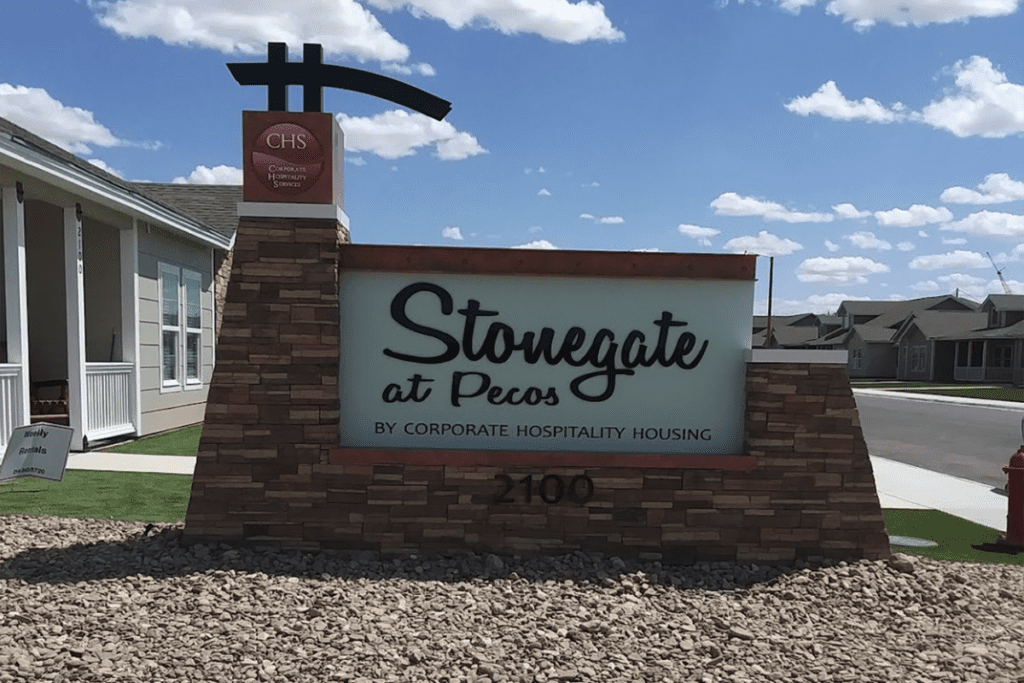
We are one of the few providers that can satisfy any workforce lodging need—Hotels, Man Camps, and Homes.
When you partner with CHS, you don’t have to choose between a hotel broker and a man camp operator. We handle it all.
- One Invoice: Whether your team is in a CHH-owned lodge, a Hilton, or a furnished apartment, it all appears on one consolidated bill.
- Buying Power: We use our national network to negotiate rates you can’t get on your own.
- Real Support: No call centers. You get real human service from a team that understands the oilfield and construction industries.
From extended stay lodging to remote camps, we ensure your team is rested and ready to work.
FAQs
What’s cheaper for long-term stays: hotel or corporate housing?
Generally, corporate housing is cheaper for long-term stays (30+ days). While the nightly rate might look comparable to a hotel, the ability to cook meals (saving per diem) and the exemption from hotel occupancy taxes lower the total cost of occupancy.
How do man camps price per person?
Man camps typically price based on an all-inclusive daily rate that covers the room, utilities, housekeeping, and three meals a day. Some contracts for exclusive use may charge a fixed overhead fee plus a variable daily rate per person.
Do hotels waive occupancy tax after 30 days in Texas?
Yes. According to the Texas Comptroller, guests who occupy a room for at least 30 consecutive days are considered “permanent residents” and are generally exempt from the state hotel occupancy tax. However, you must notify the hotel in advance or sign a specialized agreement to ensure this is billed correctly.
What is the best option for rotating crews?
Workforce lodges (man camps) are usually best for rotating crews because they are designed to handle high turnover and shift changes efficiently, often providing 24-hour check-in and dining schedules that match field shifts.
Ready to optimize your workforce housing budget?
Stop juggling vendors and start saving time and money. Contact us today to let CHS build a custom lodging solution for your next project.