
How to Plan Workforce Housing for Winter Construction Projects
Do construction workers work in the winter? The short answer is a resounding yes. Critical infrastructure, energy, and commercial projects don’t pause for snow. However, continuing operations through cold, ice, and shorter days requires more than just grit—it demands meticulous planning. A core component of that plan is your workforce housing strategy.
In winter, lodging becomes more than a place to sleep. It’s a critical hub for safety, crew well-being, and jobsite reliability. The right housing keeps your team warm, rested, and ready, directly impacting productivity and your project’s bottom line. The wrong choice can lead to illness, low morale, and costly delays.
At Corporate Hospitality Services (CHS), we understand these high stakes. We are your frostproof partner, simplifying your corporate lodging so you can focus on the job at hand. We handle the housing details to keep your people happy, safe, and at their best, no matter the weather.
Why Construction Continues Through Winter
While some projects slow down, many accelerate during the colder months. Urgent infrastructure needs don’t follow a seasonal calendar. Specialized techniques allow work to proceed even in harsh conditions; for example, ground-thaw equipment and heated enclosures mean concrete pours and foundation work can continue safely. Much of the construction work in winter also moves indoors for finishing tasks.
Furthermore, scheduling projects in the off-season can offer significant strategic advantages, including:
- Potential for off-season pricing on materials and services
- Faster permitting processes in some municipalities
- Less competition for resources and skilled labor
- Increased availability of specialized crews
Winter Construction Site Realities
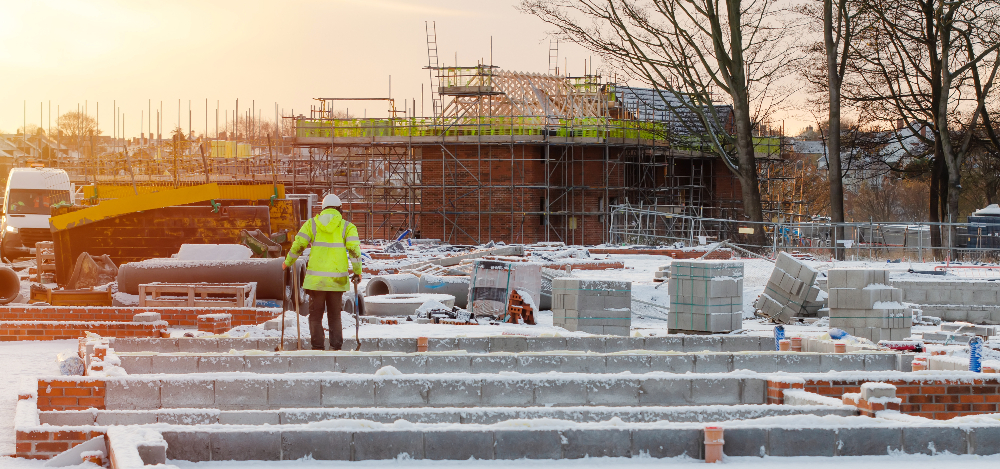
A winter construction site presents unique challenges that every project manager must address. Acknowledging these realities is the first step toward mitigating them effectively.
- Cold Stress & Health Hazards: Exposure to cold is a serious occupational hazard. It increases the risk of hypothermia, frostbite, and trench foot. Cold temperatures also reduce manual dexterity and can slow reaction times, making accidents more likely.
- Slips, Trips & Falls: Ice, snow, and slush create treacherous surfaces. Without constant management, the risk of injury from slips and falls on the job site and during commutes skyrockets.
- Material & Equipment Delays: Winter weather can wreak havoc on logistics. Frozen ground complicates earthwork, concrete can be ruined if it freezes before curing, and winter storms can delay critical material deliveries for days.
- Reduced Productivity: Bulky winter clothing can hamper movement, and shorter daylight hours limit the workday. Add in weather-related delays, and maintaining project schedules becomes a significant challenge.
Key Housing Features for Winter Construction Crews
To combat these challenges, your construction worker housing must be more than just a roof over their heads. It needs to be a strategic asset designed for the demands of a winter project.
- Heated and Insulated Lodging: Your first line of defense is warm, well-insulated accommodations. Modular man camps and lodges can be fully winterized to provide a comfortable refuge from the cold.
- On-site Dining with Hot Meals: Working in the cold burns a significant number of calories. Providing access to hot, hearty meals is crucial for keeping energy and morale high. Many of our CHS-owned lodges feature on-site chefs serving three fresh meals a day.
- Laundry & Gear Drying Zones: Wet gear is not only uncomfortable but dangerous in cold weather. On-site laundry and dedicated spaces for drying boots and outerwear are essential for crew health and safety.
- Proximity to the Jobsite: Reducing commute time is critical. Well-located accommodations minimize travel on potentially hazardous winter roads, ensuring your crew arrives safely and on time.
- 24/7 Support and Maintenance: A failed heating system in winter is a crisis. Having 24-hour maintenance on-site ensures that any issues with heating, plumbing, or power are resolved immediately.
Types of Housing That Work in Winter
CHS offers a diverse portfolio of construction crew lodging options to meet the specific needs of any winter project.
- Lodges / Man Camps: Ideal for remote projects, our lodges are move-in ready and designed for workforce life. They can be rapidly deployed, scaled for any crew size, and fully winterized with amenities like 24-hour gyms, rec centers, and hot meal service.
- Extended-Stay Hotels: A great option for smaller teams, supervisors, or projects located near urban centers.
- Furnished Apartments: For longer-term projects, furnished apartments offer the comforts of home, allowing teams to cook, relax, and unwind in a private space.
- Single-Family Housing: For project leaders or crews that prefer a more traditional home environment, we can arrange fully furnished houses with amenities like full kitchens, garages, and backyards.
Winter Housing Planning Best Practices
Maximizing safety and efficiency during the winter starts long before the first snowflake falls. Integrate these essential best practices into your project planning to stay ahead of the cold.
- Plan Early: Book your construction workforce lodging winter accommodations well in advance. This ensures availability and allows time to prepare the site and units for cold weather.
- Build in a Weather Buffer: Account for potential storm days or temperature-related work stoppages in your project timeline.
- Monitor Weather & Be Flexible: Stay on top of forecasts and be prepared to adjust work schedules and tasks to ensure crew safety.
- Prioritize Safety Training: Continuously train your team on recognizing the signs of cold stress and navigating a winter construction site safely.
- Arrange for Redundant Systems: Work with your housing provider to ensure backup power and heat sources are available in case of a utility outage.
FAQs about Winter Construction Projects
Can construction continue throughout the winter?
Absolutely. With proper planning, specialized equipment, and a focus on crew safety and well-being, construction projects can proceed efficiently all winter long.
What are the greatest risks for construction crews in winter?
The primary risks include cold-related illnesses like hypothermia and frostbite, increased instances of slips and falls on ice, and project delays caused by severe weather or frozen materials.
What features does ideal housing for winter crews need?
Ideal winter housing must have reliable heating, insulation, access to hot meals, facilities for drying wet gear, and be located close to the jobsite to minimize hazardous travel.
How far in advance should housing be booked for a winter project?
It’s best to book several months in advance. Early booking provides the best selection, allows for proper winterization of the facilities, and helps avoid last-minute logistical challenges.
Why Choose CHS for your Winter Housing Needs?
Winter projects demand more than just hard hats and heavy machinery—they require a smart, comprehensive housing strategy that protects your most valuable asset: your people.
CHS is the smart choice for end-to-end winter housing logistics. From single-night hotel stays to fully-managed, long-term man camps, we handle all the details with one call and one consolidated invoice. We leverage our network and buying power to secure the best rates, and our 24/7 support ensures your crew is always taken care of.Need workforce housing that’s winter-ready? Contact CHS today and let us help you keep your crew safe, comfortable, and your project on schedule.